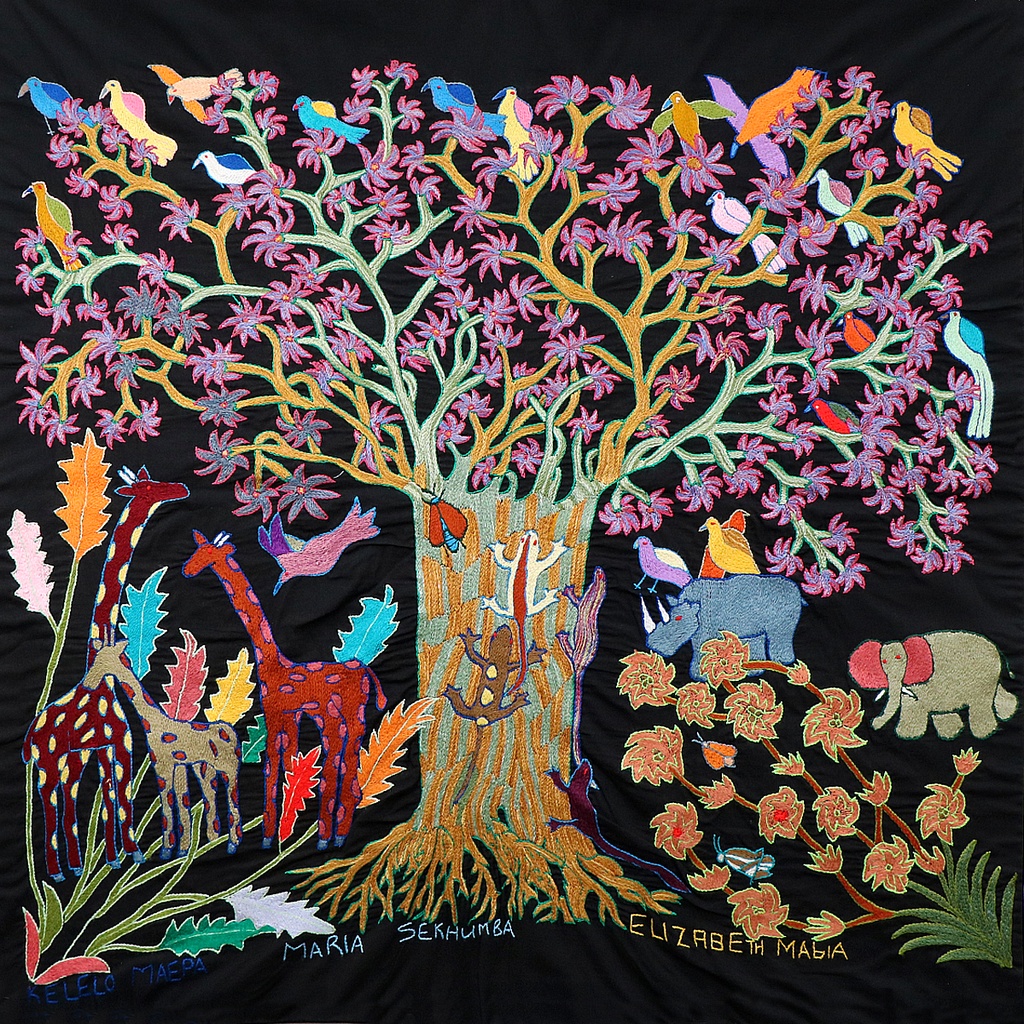
The Story Behind the Mapula Embroidery Project
“In the ‘throwaway’ place live the ‘throwaway’ people,” wrote a South African journalist in 1990, describing the Winterveld—a settlement where Black families were forcibly relocated during apartheid and left to survive without basic services. Homes were built from scrap materials. Clean water was scarce. Disease, hunger, and loss were part of daily life.
Amid these harsh conditions, the Sisters of Mercy opened a small community center, offering education and skills training to women who had been given very little but expected to endure everything. In 1991, a simple sewing project began. Most of the women had never embroidered before. What they did have was lived experience—and stories that needed to be told.
That project became Mapula.
Over time, the women of Mapula learned to draw, design, and stitch their own narratives—transforming thread and cloth into powerful works of art. In 2000, Mapula received South Africa’s highest craft honor, and its work has since been collected, exhibited, and celebrated around the world. The message was clear: embroidery is not a minor craft—it is high art.
The income from Mapula has helped women clothe, feed, and educate their children, stitching dignity and opportunity into everyday life. When the pandemic brought tourism to a halt, the project—and the families who depend on it—were once again at risk.
Each Mapula piece is hand-stitched by a woman artist over days or weeks, carrying her story, resilience, and hope in every stitch. By supporting the Mapula Embroidery Project, you are helping ensure these stories continue to be told—one needle, one thread, one life at a time.